Griseofulvin Dosage For Cats: Calculator, Chart & Safe Guide
If your cat has just been diagnosed with ringworm and sent home with a prescription for griseofulvin, you’re likely to have two questions: What exactly is the dosage of griseofulvin can i give them, and what should I watch for.
This guide answers all — it has a simple Griseofulvin for dogs dosage chart, a dosage calculator you can use now and the safety information that’s often lost in a sea of text on other websites.
Quick facts:
- Griseofulvin is not an antibiotic, it is an antifungal to treat fungal skin infections such as ringworm.
- The two formulations (microsize and ultramicrosize) are applied in quite different doses – one of the most frequent dosing errors is using both together.
- Cats are more susceptible to side effects than dogs, so monitoring is as important as getting the number correct.
What Is Griseofulvin?
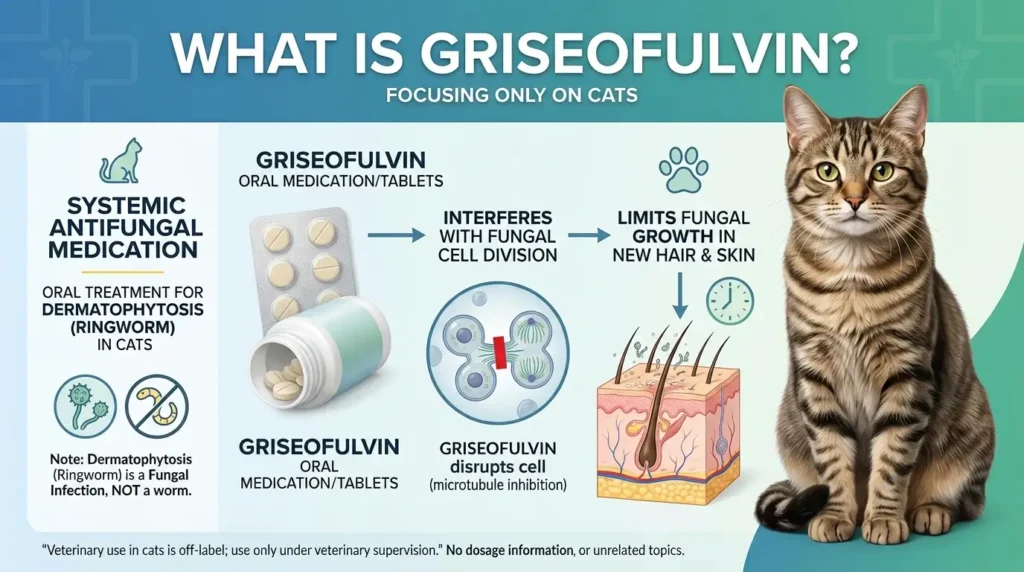
Griseofulvin is a systemic antifungal drug that can be given to cats and dogs orally and used to treat dermatophytosis (ringworm) although ringworm is actually a fungal infection and not a worm. It is marketed as Fulvicin or Gris-PEG and it work by preventing fungal cells from dividing, preventing the infection from invading new hair and skin as it develops.
The use of griseofulvin in cats is technically “off-label” (also called extra-label), because, although it has been used for decades to treat ringworm in cats, it has not been approved by the FDA for that purpose. In veterinary medicine, off label use isn’t necessarily a red flag in and of itself; it simply means that your vet is using published clinical data instead of a package insert that lists drug doses for cats only.
What Does Griseofulvin Treat in Cats?
The primary use of griseofulvin is for the treatment of dermatophytosis, which is usually caused by Microsporum canis. Ringworm lesions appear as circular or irregular areas of hair loss, possibly accompanied by scaling, redness or crustiness, and are most frequently found on the front legs, ears and head. Kittens and cats with compromised immune systems are most susceptible, as they may be less able to cope with the fungus than healthy adults.
It’s good to know that griseofulvin medication is no longer the first option. Newer anti-fungal agents such as itraconazole and terbinafine are now considered to be at least as effective and have fewer side effects, according to the veterinary dermatology guidelines. While vets still use griseofulvin dosage for cats in some instances (either because of cost, availability, or a certain clinical situation), when it is prescribed to your cat it’s a fair question to ask your vet why?
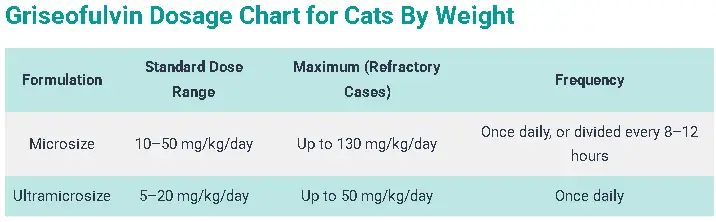
Griseofulvin Dosage Chart for Cats By Weight
| Formulation | Standard Dose Range | Maximum (Refractory Cases) | Frequency |
| Microsize | 10–50 mg/kg/day | Up to 130 mg/kg/day | Once daily, or divided every 8–12 hours |
| Ultramicrosize | 5–20 mg/kg/day | Up to 50 mg/kg/day | Once daily |
One guideline that is widely-quoted by vets is about 25 mg for every pound of cat body weight, once every 24 hours — but this is a reference point and not a replacement for your vet’s advice. The specific quantity will vary according to the type of formulation you are using, the extent of the infection and your cat’s general condition.
Why Formulation Matters So Much
The smaller drug particles in Ultramicrosize griseofulvin are more efficiently absorbed by the body. That is why its effective dose is about half of microsize griseofulvin’s dose. When an ultramicrosize or microsize dose is given, this can mean under or over-dosing your cat, please review the label on the bottle each time — your vet has only said the number verbally.
How Long Does Treatment Last?
Griseofulvin will not remove the fungus from infected hair, it works only on new growth. This means that it will usually take 4–6 weeks, if not longer, for the treatment to be effective. Most vets will not be satisfied with the appearance of the visible lesions before stopping treatment; they will wait until the fungal culture is negative (occasionally a second one will be required, weeks apart) to be sure the infection has gone. One of the most common reasons for recurrence is stopping treatment too early.
How to Give Griseofulvin to Your Cat
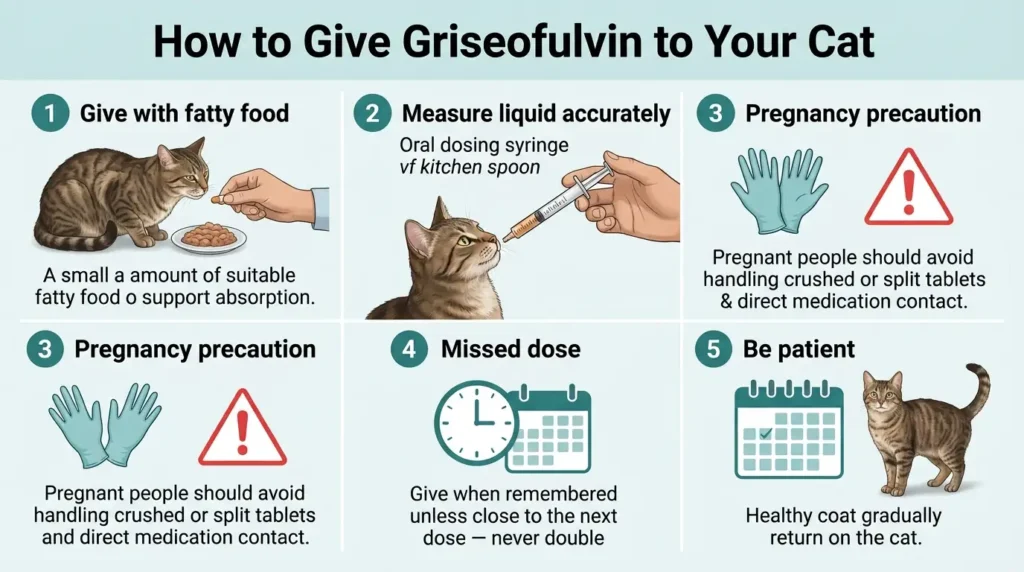
- Give with a fatty food. A small amount of griseofulvin mixed in food is also absorbed much better if it is mixed with cheese, butter, cream or a little oil. A common cause of an apparently “incorrect” dose is being fed on an empty stomach.
- Accurately measure liquid formulations. Dose using the dosing syringe that comes with it, NOT kitchen spoons.
- Gloves are to be worn if pregnant. Griseofulvin can cause birth defects (teratogenic) and there is a potential for risk if handling crushed or split tablets or directly coming into contact with the medication.
- Missed a dose? Administer as soon as it is remembered. Take the next dose at the usual time, do not make up the missed dose — do not double dose.
- Be patient. It may take several weeks to see any visible improvement and lesions may appear a little worse before they improve as old, infected hair is shed.
Side Effects of Griseofulvin in Cats
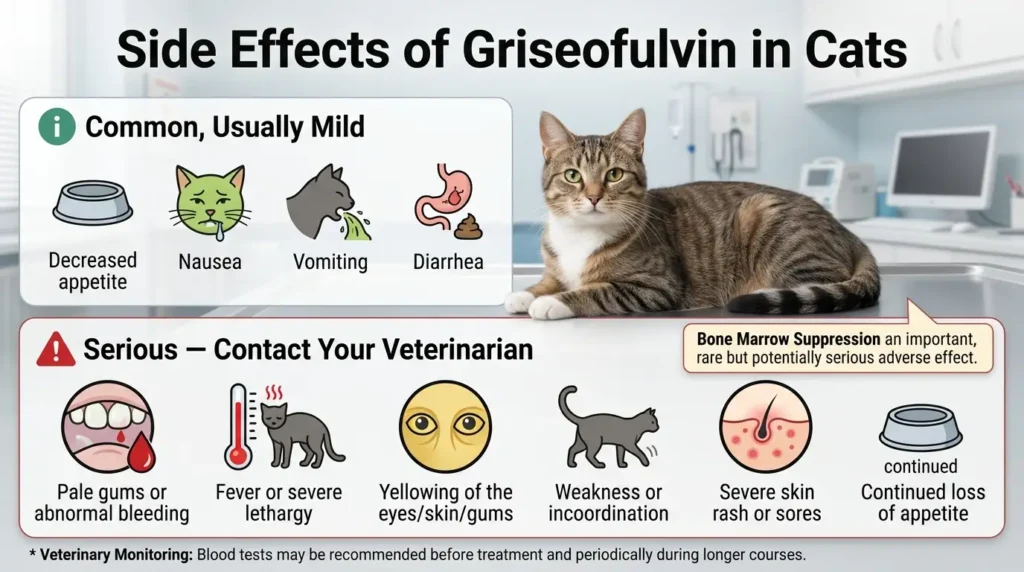
Although cats can usually handle griseofulvin for cats well, they are more susceptible to effects than dogs so it’s important to know what is common and what should be a call to your veterinarian.
Common (Usually Mild) Side Effects
- Decreased appetite
- Nausea
- Vomiting
- Diarrhea
Serious Side Effects — Contact Your Vet Immediately
| Sign | Why It Matters |
| Pale gums, abnormal bleeding | Possible bone marrow suppression or anemia |
| Fever, severe lethargy | Possible immune suppression or infection |
| Yellowing of skin, eyes, or gums | Possible liver toxicity |
| Weakness, incoordination, collapse | Neurological reaction |
| Severe skin rash or sores | Drug sensitivity reaction |
| Continued loss of appetite | Can signal a more serious systemic effect |
The most serious known side effect of griseofulvin in cats is its ability to cause bone marrow suppression. Although it is rare at proper dosages, it can be a serious side effect, so most vets recommend having a blood work done prior to administration of this treatment, and periodic blood counts, about once every 1-3 weeks, during longer courses.
Cats Who Should NOT Take Griseofulvin
Not all cats are suitable for taking Griseofulvin. It is usually avoided by vets in:
- Cats that are pregnant — has been shown to cause birth defects and should NOT be administered while pregnant.
- Nursing or breeding cats – safety not established.
- Cats with FIV or feline leukemia (FeLV) – these cats are known to have an increased risk of developing severe bone marrow suppression due to griseofulvin. It is usual procedure to test for FIV and FeLV prior to treatment.
- Cats with significant liver disease — the liver processes griseofulvin, so impaired liver function raises the risk of toxicity.
- Very young kittens, most sources indicate this age limit is around 6-8 weeks of age though younger kittens generally are more sensitive to side effects.
- Some breeds are more cautious. and cats in particular have been reported as being more affected by bone marrow suppression on this drug, such as Abyssinian, Himalayan and Siamese cats.
Drug Interactions to Flag for Your Vet
Griseofulvin may interact with a number of other medicines, such as:
- Phenobarbital
- Cyclosporine
- Theophylline
- Blood thinners such as Warfarin.
- Aspirin
- Estrogen-containing medications
Before beginning griseofulvin, make sure to let your vet know if your cat is taking any other medicines, including supplements.
Monitoring During Treatment
A typical monitoring plan looks like:
- Before starting: FIV/FeLV testing, baseline blood count, and sometimes liver enzyme levels.
- While on therapy: Blood counts repeated approximately every 1-3 weeks, particularly for extended courses of treatment.
- To determine cure: fungal culture (don’t rely on visual improvement…can still be there after looking better).
- At home: Be vigilant for the potentially serious side effects mentioned above, and contact your veterinarian if something doesn’t seem right, rather than waiting until the next appointment.
Griseofulvin vs. Other Antifungals for Cats
| Drug | Typical Use Today | Notes |
| Griseofulvin | Less commonly first choice | Effective, but higher side-effect risk in cats than newer options |
| Itraconazole | Often preferred | Comparable or better efficacy, generally better tolerated; not for pregnant cats |
| Terbinafine | Often preferred | Effective, persists in hair/skin for weeks after dosing |
| Fluconazole | Occasionally used | Less effective specifically against ringworm fungi than the others |
There is normally a reason for your vet’s recommendation to use griseofulvin, whether it is cost, the availability of the drug or your cat’s individual case, and it’s a perfectly valid question to ask at your next visit.
You may Also Like to Read:
- Clomicalm Dosage For Cats: Calculator, Chart & Safe Guide
- Amoxicillin Dosage For Cats: Calculator, Chart & Safe Guide
FAQs
What is griseofulvin used for in cats?
It works with fungal skin infections (usually ringworm or dermatophytosis) caused by Microsporum canis.
How much griseofulvin should I give my cat?
Dosage will depend on the formulation, which is approximately 10-50 mg/kg/day for microsize and 5-20 mg/kg/day for ultramicrosize as prescribed by your veterinarian. For a more individual reference number use the calculator above and always check with your vet.
Is griseofulvin safe for cats?
When used at the correct dose and monitored properly, it’s generally safe, but cats are more sensitive to side effects than dogs and may experience (albeit rare) bone marrow suppression. This is why blood tests are routine when receiving treatment.
Is griseofulvin approved for the use of kittens?
They can be administered only when old enough, typically after 6–8 weeks of age, and kittens are more susceptible to side effects than older cats.
How long to see results with griseofulvin for ringworm?
It takes a few weeks for some visible improvement. Typically, treatment takes at least 4 to 6 weeks, sometimes longer and is carried out until the fungus culture is negative.
If I forget to take a dose, what should I do?
Administer ASAP. Do not give a double dose to make up for one that is missed; if it is near time for the next dose, skip the missed dose.
Is it better to feed griseofulvin with food?
Yes — always provide with a fatty food such as cheese, butter or a little oil as this will greatly enhance absorption.
What are the most common side effects?
Decreased appetite, nausea, vomiting, and diarrhea are the most frequently reported, and are usually mild.
What are some red flags to keep an eye out for?
Pale gums, abnormal bleeding, yellowing of skin or eyes and severe weakness or incoordination, collapse, fever or severe skin reactions all require an immediate call to your vet.
Is it safe to give griseofulvin to pregnant cats?
No. Griseofulvin is known to cause birth defects and should NOT be used while a cat is pregnant.
Is griseofulvin safe for cats that are FIV or FeLV?
No — cats with these viral infections have been documented to have a higher risk of severe bone marrow suppression from griseofulvin, so it is recommended that these cats be tested for these infections prior to administration.
What’s the difference between microsize and ultramicrosize griseofulvin?
Smaller particles (ultramicrosize) absorb better and the effective dose is about half as much as microsize. Always apply according to the particular formulation labelled.
Do you still use griseofulvin on cats often?
Not as frequently as in the past. Griseofulvin is no longer used in most instances because newer antifungals are more effective and have fewer side effects.
Can I use griseofulvin (which is prescribed for dogs) or human griseofulvin on my cat?
No. Dosing, formulation and safety monitoring varies from species to species and from one prescription to another — administer only medication that has been prescribed for a cat.
Does griseofulvin interact with other drugs?
Yes, such as phenobarbital, cyclosporine, theophylline, warfarin, aspirin. Before beginning treatment, show your veterinarian a list of all the medications your cat receives.
Final Thoughts
Griseofulvin Dosage For Cats is a good choice for treating feline ringworm, it is important to know the details since more than with most other medications: correct formulation, correct dosage (based on body weight), feed just before the dose is given and monitor closely for any side effects throughout the entire period of treatment.
This guide (along with the calculator above) are not meant to replace a conversation with your vet but rather to help you understand and double check what your vet has prescribed. When in any doubt, always give your cat a call to check what was being administered, the dosage and/or symptoms, before the next dose.