Clomicalm Dosage For Cats: Calculator, Chart & Safe Guide
When you’re faced with a tiny pill and an anxious cat, determining the correct Clomicalm dosage for cats can be stressful. The short answer: most cats will be dosed at about 0.3 to 1.0 mg of clomipramine per kg of body weight once a day, but this will depend on your cat’s size and condition and your vet’s treatment plan. This useful guide explains the dosage chart, a free calculator, and more so you can safely give it.
Your veterinarian just gave you the prescription for Clomicalm for cats, or you’re trying to figure out the dosage written on the label, and the numbers don’t seem to make sense. Here you’ll find out the official numbers of Clomicalm (clomipramine) dosage in cats, where the data is from, the actual cat research results, and how to know if it’s an issue before it’s too late.
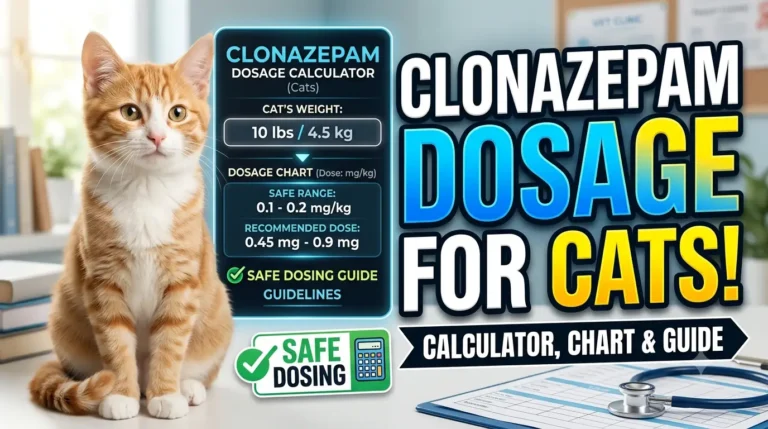
Clomicalm Dosage Calculator for Cats
Reference-only dosing tool based on labeled clomipramine hydrochloride dosing for cats
Recommended Dosage
- Clomicalm is administered once daily at 0.3–1.0 mg/kg body weight, per the labeled dosing guideline.
- The dose shown reflects the point you selected on the labeled 0.3–1.0 mg/kg range — it is not a substitute for a prescribed dose.
- Never adjust or start this medication without direction from a licensed veterinarian.
This calculator is for informational and reference purposes only and does not replace professional veterinary guidance. Always confirm dosing with your veterinarian before administering any medication to your cat.
© medscat.com
Key takeaways
- The use of Clomicalm in cats is classified as extra-label (off-label) and is a practice common among veterinarians, allowed under FDA guidelines, and the dosage is based on clinical experience or published feline studies and not on an FDA-approved cat label.
- The usual dose for cats is approximately 0.3-1.0 mg/kg, once a day orally.
- It will take 2-6 weeks before the behaviour changes are obvious in most cats if it is dosed regularly.
- In feline studies, the most common side effects reported are sedation, decreased appetite and mild GI upset.
- Do NOT adjust, stop or increase dose without consulting your veterinarian.
What Is Clomicalm, and Is It Actually Approved for Cats?
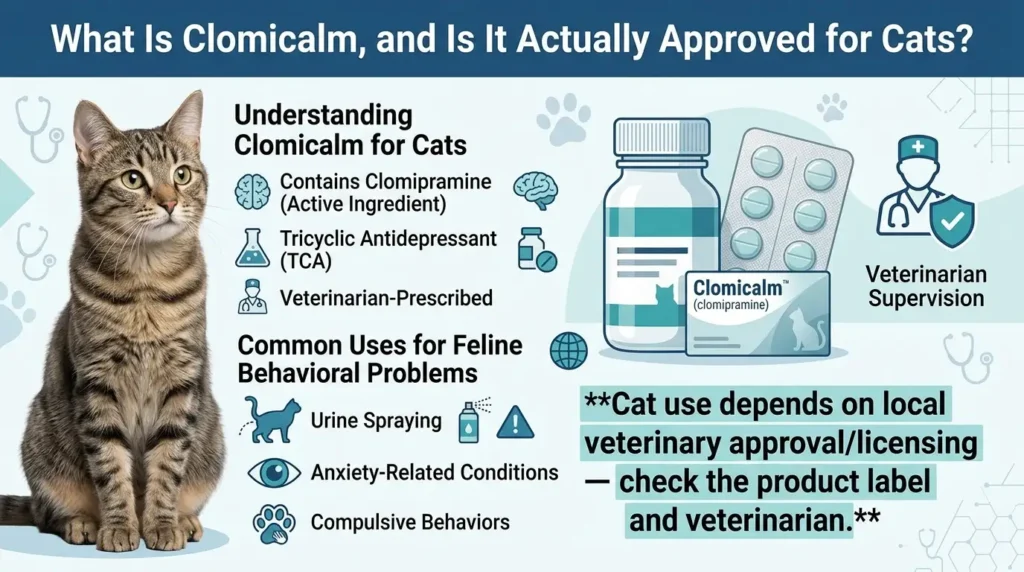
Clomicalm for cats dosage is the brand name for the tricyclic antidepressant (TCA) clomipramine hydrochloride, which was originally developed for use in humans for depression and obsessive-compulsive disorder. Elanco’s Clomicalm tablets are FDA approved (NADA 141-120) in veterinary medicine for the treatment of separation anxiety in dogs over six months of age in conjunction with a behavior modification program.
Clomicalm is not FDA approved for use in cats. This is called off-label use (also known as extra-label use) and is legal and often done in veterinary medicine when a drug approved for one species or condition is applied to another due to clinical evidence and experience. It simply refers to the fact that the dosing recommendations for cats are based on published studies in cats, and clinical experience, and not the drug’s own FDA label.
Clomicalm vs. Generic Clomipramine
Clomicalm dosage for cats is a meat flavored tablet specially formulated for animals and equipped with a veterinary label. Clomipramine is also frequently used as a human brand called Anafranil, others, and is compounded for use in cats by veterinarians and compounding pharmacies.
Either way, the drug used and the math will be the same: It’s just different tablet strength, flavoring and cost. Be sure to check with your vet or pharmacist to ensure that the tablet size and strength your cat is taking is the one that is prescribed for your cat.
What Vets Use Clomicalm For in Cats
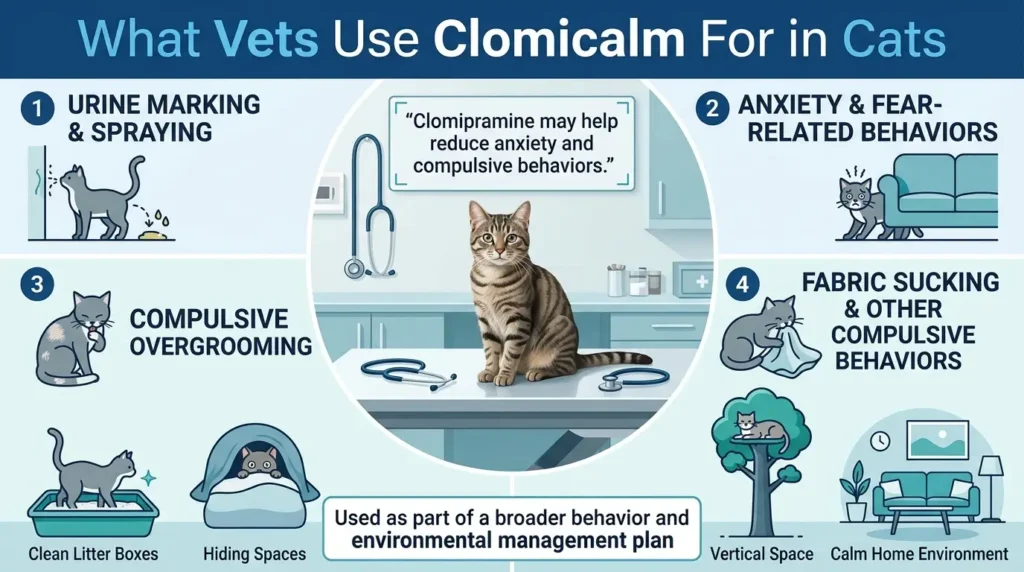
Clomipramine for cats is most commonly prescribed for cats in combination with other treatments for:
- Urine marking/spraying — most extensively researched use, usually in conjunction with litter box and environmental changes
- Anxiety-related behaviours such as some types of fear-based aggression
- Compulsive behaviours: excessive grooming/overgrooming (psychogenic alopecia) or fabric sucking.
- In some cases, as part of a wider treatment plan, feline hyperesthesia syndrome.
In all situations, medication is intended to be used in conjunction with, not in lieu of behavior modification — such as multiple litter boxes, more vertical space, more hiding space, and a decreased amount of stressors in the home. Clomicalm medication does not make a cat ‘go with the flow’—it helps to reduce anxiety so that training and environment changes can really impact.
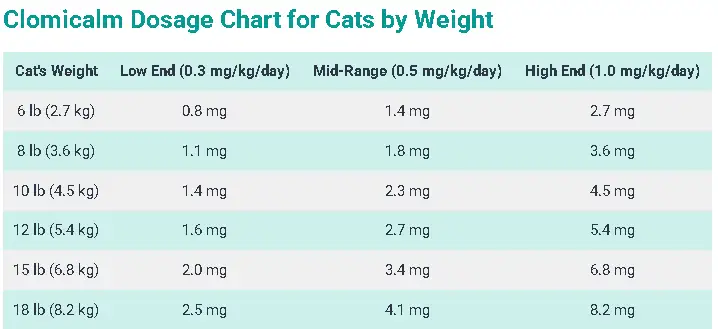
Clomicalm Dosage Chart for Cats by Weight
The estimated daily dose (as shown in the chart below) is in the range of 0.3 to 1.0 mg/kg. This is only a reference chart, and your veterinarian will inform you where in the range to dose your particular feline.
| Cat’s Weight | Low End (0.3 mg/kg/day) | Mid-Range (0.5 mg/kg/day) | High End (1.0 mg/kg/day) |
| 6 lb (2.7 kg) | 0.8 mg | 1.4 mg | 2.7 mg |
| 8 lb (3.6 kg) | 1.1 mg | 1.8 mg | 3.6 mg |
| 10 lb (4.5 kg) | 1.4 mg | 2.3 mg | 4.5 mg |
| 12 lb (5.4 kg) | 1.6 mg | 2.7 mg | 5.4 mg |
| 15 lb (6.8 kg) | 2.0 mg | 3.4 mg | 6.8 mg |
| 18 lb (8.2 kg) | 2.5 mg | 4.1 mg | 8.2 mg |
In actual use a lot of cats are dosed close to 5mg a day no matter what their weight is as it corresponds to a tablet size and within the recommended range for the average sized cat, but of course the number your veterinarian gives you is always the most important.
How the Dose Is Calculated
There’s not much math involved:
Daily dose (mg) = Cat's weight in kg × dose rate (mg/kg)For a cat that weighs 10 lb, this will be about 4.5 kg, so using a mid-range dose of 0.5 mg/kg will give the cat approximately 2.3 mg daily. It isn’t the numbers — it’s the rate within the range which is a clinical decision and not a mathematics problem.
How Clomicalm Dosing Actually Starts and Changes Over Time
Most veterinarians will not choose a cat’s final target dose. One way to do this is to begin with the lower end of the range then slowly work up to the upper end of the range over 1-2 weeks as the body becomes comfortable with the dose, reducing the side effects of sedation or upset GI. Some veterinarians will split the amount up into two smaller portions initially and then gradually increase to once a day as the cat gets used to.
Some vets may be able to taper rather than stop suddenly, because if a behaviour problem is under control and has remained that way for some time (often several months, as determined by the individual case) some will try to do a slow taper instead, as stopping a TCA suddenly can lead to a rebound of symptoms or mild withdrawal-type effects. Clomicalm cat medicine should never be discontinued on your own, but only on a tapering program as prescribed by your veterinarian.
How Long Does Clomicalm Take to Work in Cats?
Don’t rush to produce a overnight change. Clomipramine takes 2-6 weeks to take effect on behavior, and some cats require the full 6 weeks or even longer (at the correct dose) before you can make a fair assessment as to whether or not it is effective.
This is one of the reasons why clomipramine is not recommended for occasional stressors (such as a veterinary appointment or fireworks season) and for these one-off stressors, your vet will likely opt for a more rapidly acting one-off medication.
What the Feline Research Actually Shows
General dosing guidelines, however, aren’t the only things to be considered; knowing what has been tested would help. A randomized, placebo-controlled multicenter study, published in The Journal of the American Veterinary Medical Association, involved 67 cats with a history of urine spraying and was tested with 3 dosage bands of clomiprame: 0.125–0.25 mg/kg once daily, 0.25–0.5 mg/kg once daily and 0.5–1 mg/kg once daily.
Sedation was reported as the most frequent side effect in 27 of 50 cats treated, and was significant for all three dosage bands compared to placebo; however, it was not sufficiently sedative to prevent treatment.
A separate, earlier study by Landsberg and Wilson administered a single drug, at about 0.5 mg/kg, once daily to a group of cats that were urine marking but not subjected to any behavior modification and found that 20 out of 25 cats reduced their urine marking by at least 75% within four weeks, with side effects considered to be mild overall.
These are two of the more common feline data points that are cited for the basis of the dosing ranges that are currently used by veterinarians, and both of these used a dose within the 0.3-1.0 mg/kg range cited throughout this guide.
Where the research is thinner: Long-term (beyond about 3-4 months) safety data are sparse for cats compared to dogs, and there is no extensive published database that summarizes ideal doses for a particular feline behavior other than spraying. This is one of the reasons why a fixed chart is not as important as individual vet judgment.
Clomicalm Side Effects in Cats
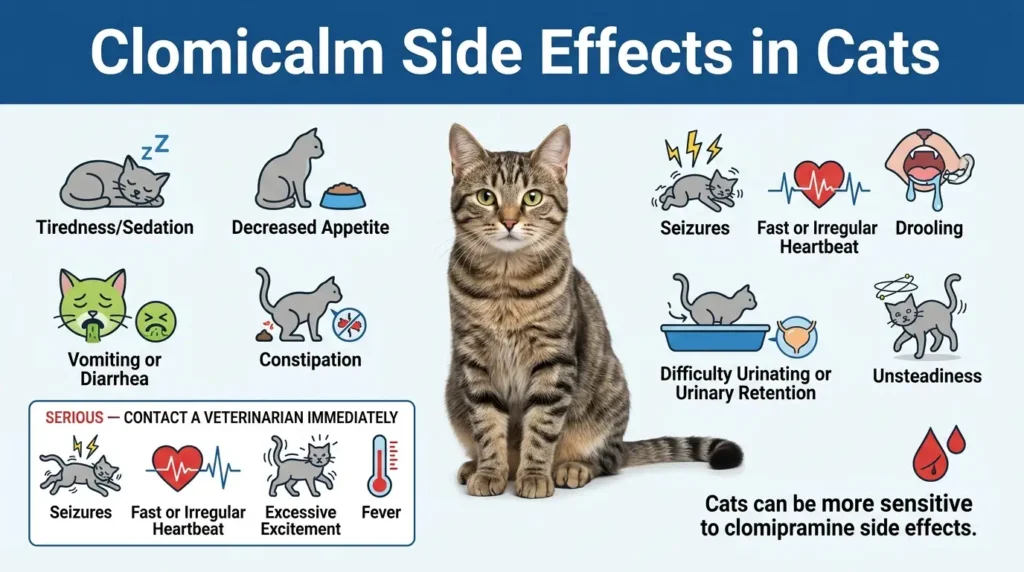
Common, Milder Side Effects
- Sedation or low energy, particularly during first days of treatment
- Reduced appetite
- Constipation or diarrhea (mild)
- Dry mouth
- An inability to completely empty the bladder (urinary retention)
- The amount that weight changes over time
Most of these are dose-related and tend to diminish as a cat becomes accustomed to the product, or can be controlled by changing the dosage or time of day when the product is given under veterinary supervision.
Serious Side Effects and Warning Signs
Contact your veterinarian promptly if your cat shows:
- A very rapid or irregular heart rate
- Collapse, unsteadiness or seeming dizzy
- Repeated vomiting
- Seizures or tremors
- Symptoms suggestive of serotonin syndrome: agitation, hyperactivity, fever, tremors, abnormal bleeding/bruising (especially when taking with another medication that affects serotonin)
Clomicalm Overdose in Cats: Signs and What to Do
An overdose is a real emergency with clomipramine, a tricyclic antidepressant, and should not be “waited out. Symptoms of overdose in cats and other small animals have been reported as disorientation, convulsions, vomiting, high blood pressure, a very high heart rate, constipation, and dilated pupils.
Don’t wait for your cat’s symptoms to deteriorate if you suspect they were overdosed with Clomicalm, from a mistake, accessing the pill bottle, or inadvertently overdosed due to a missed dose. Contact your veterinarian, emergency animal hospital or pet poison control hotline right away and take the medication container with you if you visit an animal hospital.
Many people refer to the “rule of 10s” with tricyclics: a dog must be administered to within 10 minutes of the average dose in the event of an overdose for that medication.
Cats That Should Not Take Clomicalm
Clomipramine should generally not be used in cats, or if it is used, only with increased precautions and control in cats with:
- Known sensitivity/allergy to clomipramine or other tricyclic (antidepressant) drugs.
- History or presence of arrhythmias or heart disease
- A seizure disorder
- The liver disease (drug goes through the liver)
- Increased eye pressure or glaucoma
- Urinary retention, decreased GI motility
- Breeding stock – known fertility problems
Prior to starting Clomicalm, always inform your veterinarian of any other health problems your cat has.
Drug Interactions to Tell Your Vet About
Clomipramine may interact with several other drugs such as:
- Monoamine oxidase inhibitors (MAOIs) like selegiline — MAOIs cannot be used together with clomipramine.
- Other tricyclic antidepressant drugs (for example, amitriptyline)
- SSRIs (such as fluoxetine, sertraline)
- Antiepileptic drug, such as phenobarbital
- Certain heart medications
- Fluconazole and other azole antifungals.
- Cimetidine
- Tramadol and other opiate medicines.
- Sedatives and NSAIDs (some)
This is not an exhaustive list and you should always inform your vet of all the drugs, supplements, and topical products (such as flea/tick) your cat is using.
Clomicalm vs. Other Feline Anxiety Medications
| Medication | Drug Class | Typical Onset | Common Use Case |
| Clomicalm (clomipramine) | Tricyclic antidepressant | 2–6 weeks | Daily, long-term anxiety/marking/compulsive behavior |
| Fluoxetine | SSRI | 2–6 weeks | Similar long-term uses; often compared directly to clomipramine for spraying |
| Gabapentin | Anticonvulsant/anxiolytic | 1–3 hours | Short-term situational stress (vet visits, travel) |
| Trazodone | Serotonin antagonist/reuptake inhibitor | 1–2 hours | Short-term situational sedation/anxiety |
The two most popular daily drugs for feline urine marking, clomipramine and fluoxetine, are effective at comparable rates when studied over a number of weeks. Gabapentin and trazodone have a much more rapid onset of action and are typically only used for a single stressful episode, not for long-term behavioral treatment.
Your veterinarian will prescribe a medication that fits your situation, whether you’re dealing with a recurring situation or a specific stressful event.
Cost of Clomicalm for Cats
Cost will depend on your veterinary or human compounding pharmacy, location and whether you are prescribed the brand veterinary Clomicalm tablets or a generic formulation of clomipramine. As a general guideline, generic clomipramine capsules are reported to range between $27 and $84 per 30 count supply via discount pharmacy programs; actual cost to your cat will depend on the strength ordered, number of capsules ordered, and the pharmacy location.
Find out from your veterinarian if there is a generic alternative that would be suitable for you, as it may be much cheaper than the brand name alternative.
Myth vs. Fact: Clomicalm for Cats
Myth: “Clomicalm is approved for dogs, not cats.
Fact: It can only be used for canine separation anxiety. Feline use is off-label, standard veterinary practice and dosing is based on clinical studies and experience and not an FDA feline label.
Myth: “It will calm my cat down within a day or two, like a sedative.
Fact: Clomicalm is NOT sedative, but it does alter brain chemistry very slowly, and a positive behavioural change is usually observed between 2-6 weeks.
Myth: “A little is better, then a lot will be better and faster.
Fact: Taking more than the recommended dose will increase the chance of adverse reactions and overdose; it will not increase the effect of the drug. TCA poisoning in dogs and cats can be a true emergency.
Myth: “Once my cat looks better I can stop giving it.
Fact: Stopping abruptly can cause a rebound in symptoms. Discontinuation shall be done in a taper, under a veterinarian’s supervision.
Common Mistakes Owners Make With Clomicalm Dosing
- estimating the dosage from a dog-specific source. Dosing is different for dogs vs. cats – do not use canine dosing for cats (and vice versa – do not use feline dosing for dogs).
- Double Dosing (when a dose is missed). This can greatly increase the risk of overdose. Simply continue with the normal dose schedule.
- Making premature judgments of effectiveness. Owners who are expecting results in days rather than weeks are likely to discontinue a treatment that just hasn’t had enough time to work.
- Stopping suddenly. Tapering shall always be done under veterinary supervision.
- Not disclosing other medications. Certain medications, such as MAOIs and SSRIs, can be hazardous when combined with MA and your veterinarian will need to know all medications used.
You May Also Like to Read:
- Amoxicillin Dosage For Cats: Calculator, Chart & Safe Guide
- Penicillin Dosage For Cats: Calculator, Chart & Safe Guide
FAQs
Are there any side effects of Clomicalm for cats?
Clomipramine for cats dosage has been widely used in cats and is generally well tolerated, with sedation and minor GI upset the most commonly reported side effects of studies in cats using an appropriate dose and monitored by a veterinarian. This is not without risk however; it should only be administered with veterinary supervision.
How much Clomicalm should I give my cat?
The general rule for cats is that they should receive 0.3–1.0 mg/kg per day, depending on body weight, condition being treated, and the discretion of the veterinarian.
Is Clomicalm safe for cats?
No. Only approved by the FDA as a treatment for canine separation anxiety. Off-label use – this is a common practice in veterinary medicine and is legal in cats.
When does Clomicalm work on cats?
Usually takes 2 to 6 weeks of regular dosage to determine if it’s being effective.
Can I give my cat Clomicalm once a day?
Yes — typically once a day is the recommended dosage, but some veterinarians split the dose when first starting out.
If my cat takes too much Clomicalm, what will happen?
Symptoms of overdose include constipation, elevated blood pressure, rapid heart rate, disorientation, seizures and dilated pupils. This constitutes a medical emergency, call your vet, emergency animal clinic or pet poison hotline immediately.
Is it possible to use Clomicalm for cat spraying?
Yes, the use is highly researched and multiple clinical trials demonstrated a decrease in spraying frequency, typically in combination with environmental and behavioural changes.
Are there any medications that can be used with Clomicalm?
Certain combinations may be hazardous, particularly when taking MAOIs or other drugs that affect the level of serotonin. Please make sure to tell your vet what all medications and supplements your cat takes before beginning treatment.
What should I do if I forget to take a dose?
Give it as soon as remembered, as long as it is not near the time of the next dose – if this happens, skip the missed dose and follow the normal schedule. Do not give a double dose.
Are Clomicalm and generic clomipramine the same?
The active ingredient and math for how much to dose will be the same, formulation, flavoring, tablet strength and cost are the only variations.
What’s the difference between Clomicalm and fluoxetine for cats?
They are both primarily indicated for long-term behavioral issues, and have had similar success in urine marking studies but have different drug classes (TCA vs. SSRI) and different side-effect profiles, depending on your cat’s health history, your veterinarian will decide which one to use.
Is it safe to give Clomicalm to kittens?
Published data on safety and use in very young cats is limited, and will depend on your kitten’s condition and be left to your vet’s discretion.
Is Clomicalm prescription only?
Yes. It is a prescription drug that must be supervised by a veterinarian for both its FDA approved (canine) and off label (feline) applications.
Will Clomicalm be a life-long treatment for my cat?
Not necessarily. Gradual weaning is eventually performed when behavior is stable and environmental/behavioral changes have been implemented; however, some cats may need to be weaned to a lower maintenance dose. This will be determined on an individual basis with your veterinarian.
Final Thoughts
The number on a Clomicalm dosage chart is only relevant in the context of the particular cat – the correct dosage will depend on your cat’s weight, health history, and response in the ensuing weeks, hence the fact that it is a prescription medication, not an over the counter medication. The chart and calculator on this page can be used to sanity-check what your vet has recommended, and to understand the rationale behind it, but take your veterinarian’s instructions as gospel.
That doesn’t mean that if it doesn’t seem to be having the desired effect after 6 weeks or if it’s causing side effects that you think are a problem, you should increase the dosage, because that is a problem you should discuss with your veterinarian.